

THE SCENE
There is a moment, about an hour south of Lisbon, when the country exhales. The motorway thins, the light turns the colour of dry wheat, and the horizon opens into that vast, hypnotic emptiness the Portuguese call the planície. This is the Alentejo, a third of Portugal and almost none of its noise: cork oaks standing alone in golden fields, whitewashed villages with blue-trimmed doorways, marble towns, rice paddies running down to a wild Atlantic coast. It is the anti-Riviera, and that is precisely the point.
We have always thought of the Alentejo as the spiritual home of slow luxury, the landscape that inspired the Countryside Edition of our own collection and the second chapter of A Paradise Called Portugal. Here, luxury is not gilt but restraint: a monastic room with metre-thick walls, bread still warm from a wood oven, a pool that holds the whole sky. These are the eight places we would return to, again and again.
São Lourenço do Barrocal, Monsaraz
The benchmark. A 200-year-old family monte near the medieval hilltop village of Monsaraz, returned to life over two decades by the eighth generation of the same family, with Pritzker laureate Eduardo Souto de Moura as architect. The restoration is so quiet you barely notice it, which is its genius: long whitewashed farm buildings, terracotta floors, its own vineyard and ancient olive trees, megaliths older than the pyramids scattered across the estate. The detail we still dream about is breakfast in the old cowshed, and the pool at dusk, when the plain turns violet and the swallows come out.
Dá Licença, Estremoz
Two Parisians from the worlds of Hermès and art, Franck Laigneau and Vítor Borges, took a hillside of olive groves outside Estremoz and made the Alentejo's most quietly extraordinary retreat. Suites are vast and museum-calm, dressed in locally quarried marble; bathtubs are carved from single blocks of it, and the collection of Jugendstil furniture would not embarrass a gallery. Three pools are cut into the hill among 120 hectares of olive trees. The detail we would remember: the white marble pool, glowing like a lit sculpture against the grove at golden hour.
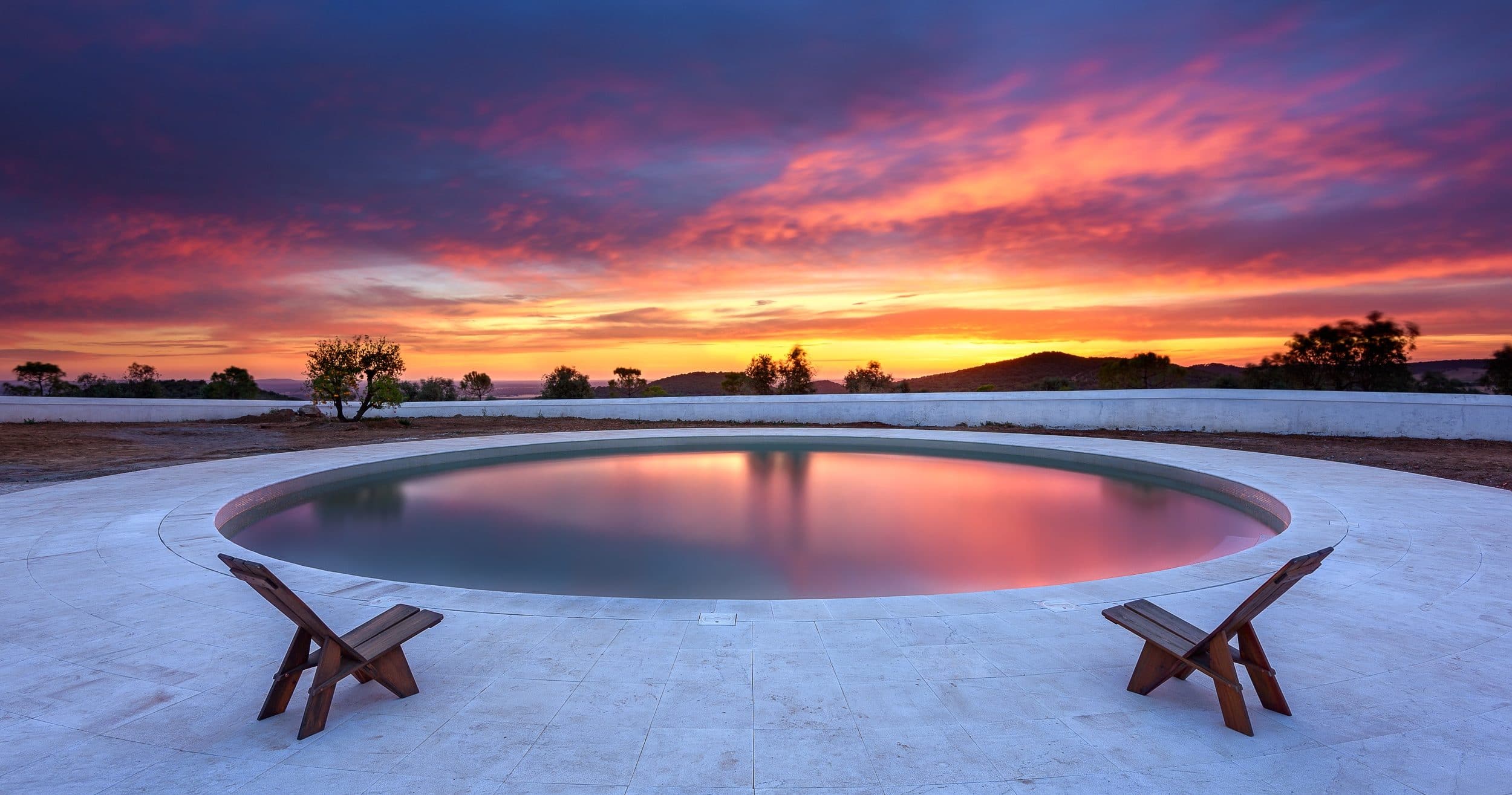
Dá Licença
Vermelho, Melides
Christian Louboutin's first hotel, and it could only have happened in Melides, the artists' village he has loved for years. Vermelho means red, and the shoemaker's eye is everywhere: a baroque-meets-village facade by architect Madalena Caiado, hand-painted azulejos, embroidered ceilings, a bar of Indian and Portuguese treasures, just 13 rooms so it always feels like a friend's, admittedly fabulous, house. Dinner at Xtian is rustic Alentejano done with couture polish. The detail we would remember is the small green-tiled pool in the garden, jewel-like, made for a late-morning swim before oysters.
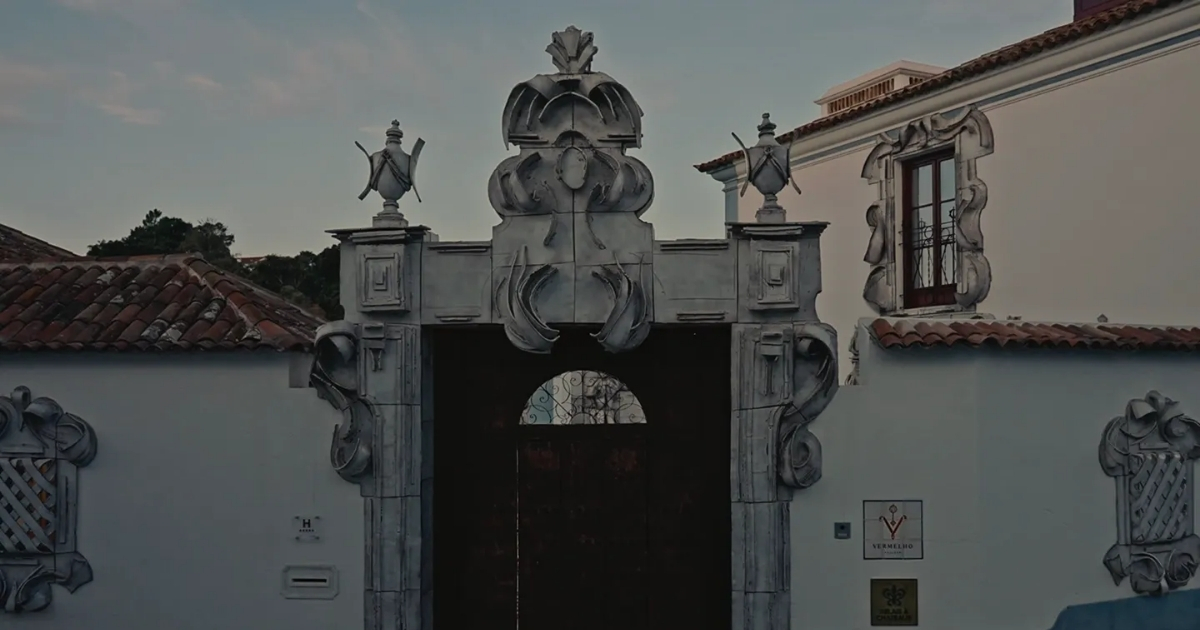
Vermelho Melides
Quinta da Comporta, Carvalhal
Architect Miguel Câncio Martins built this wellness resort in the image of Comporta itself: weathered timber, thatch and whitewash, rice barns reimagined as villas at the edge of the paddies. Everything faces the green-then-gold shimmer of the rice fields, most spectacularly the infinity pool, which appears to pour straight into them. The Oryza spa works with rice-based rituals, bicycles wait by the door, and Pego beach is minutes away. The detail we would remember: that first morning coffee on the deck, storks overhead, the paddies steaming softly in the early light.
Herdade da Malhadinha Nova, Albernoa
Deep in the Baixo Alentejo, the Soares family runs this Relais & Châteaux wine estate across some 450 hectares of vineyards, olive groves and cork oak pasture, with rooms scattered between the original country house and a handful of impossibly chic farmhouses. Days are structured around pleasure: horseback rides at dawn, tastings in the family cellar, a tasting menu built almost entirely from the estate. It is the Alentejo at its most generous. The detail we would remember is riding out through the vines before breakfast, then swimming while the heat builds over the plain.
Torre de Palma Wine Hotel, Monforte
A fortified agricultural estate with roots in 1338, crowned by the tower that gives it its name and reawakened by architect João Mendes Ribeiro as a member of Design Hotels. The mood is elegant austerity: white volumes, dark timber, Alentejo craft used with a very sure hand, vineyards and a working winery at the door. Climb the tower at sunset and the plain unrolls in every direction, unbroken. The detail we would remember: blending your own wine in the cellar, then dinner under the stars in the courtyard where horses graze beyond the wall.
Pa.te.os, Melides
Our first insider pick, and the purist's choice. On a hill of cork oaks and wild grasses above Melides, Manuel Aires Mateus, Portugal's great poet of concrete, designed four monolithic houses arranged around open patios, each with its own pool and a horizon of sea. There is no lobby, no restaurant, no schedule; provisions arrive, silence does the rest. It is architecture as a form of meditation, radical and deeply calming at once. The detail we would remember is floating in your private pool at dusk, the concrete still warm, the Atlantic a silver line in the distance.
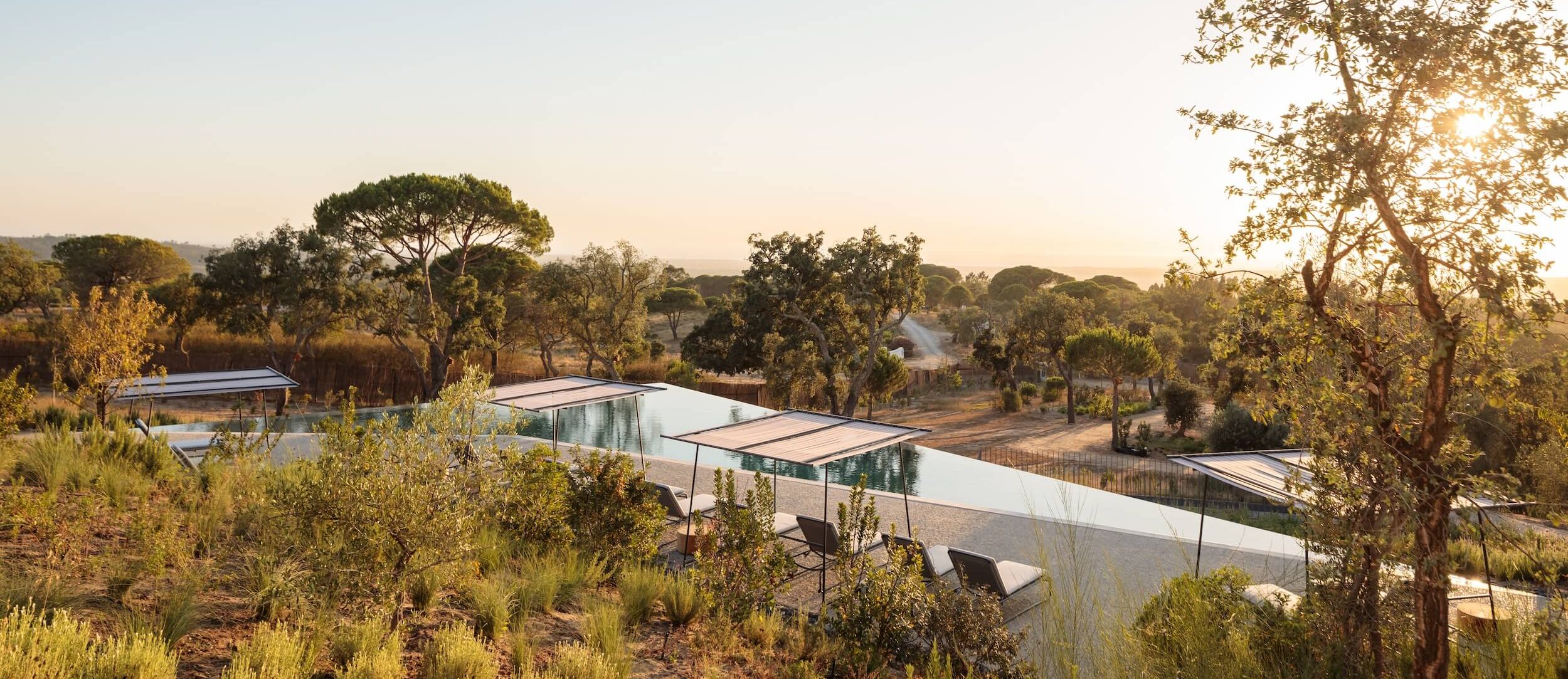
Pa.te.os
Craveiral Farmhouse, São Teotónio
Our second insider pick sits inland from Zambujeira do Mar, where the Alentejo tips toward the wild beaches of the Costa Vicentina. Craveiral is a modern farmstead of whitewashed pods among orchards and kitchen gardens, built around a true farm-to-table philosophy: the restaurant cooks over fire with whatever the land gives that morning. It is barefoot, warm-hearted and quietly stylish rather than precious. The detail we would remember: picking herbs with the gardeners before dinner, then the saltwater pool, and the ten-minute drive to cliffs where the Atlantic detonates below you.
What to Pack for the Alentejo
The Alentejo asks for almost nothing, which is why what you bring matters. Think washed linen in wheat and white, espadrilles for cobbled villages, a straw hat with real shade in it. A swimsuit, always, because every one of these hotels is organised around water; a second one, because the first will still be drying at noon. And gold, worn simply, the way we designed the Countryside Edition to be worn: warm metal against warm stone, a fine chain with a linen shirt, earrings that catch the last light at an outdoor table. Nothing here needs to shout. Neither should you.
FAQ
When is the best season to visit the Alentejo?
How many nights do you need?
Do you need a car?
Coast or interior?
"IN THE ALENTEJO, LUXURY IS NOT GILT BUT RESTRAINT: A ROOM WITH METRE-THICK WALLS, BREAD FROM A WOOD OVEN, A POOL THAT HOLDS THE WHOLE SKY."
— The SG Edit
SHOP THE STORY


