

Brigitte Anne-Marie Bardot was a French actress who rose to fame in the 1950s and 1960s. She was not merely a performer, but a woman of captivating, authentic personality and remarkably progressive ideas for the time.
Before she ever conquered the screen, Brigitte already understood the power of image: she began her modelling career at fifteen, and at seventeen made her film début in “Manina, la fille sans voile”, a film that, curiously, already foreshadowed what was to come by showing her in a bikini at a time when such a thing still caused scandal.
It was in the 1950s, with the birth of the Nouvelle Vague, that French cinema found its own voice and Bardot found the ideal stage for her personality. In 1957, “And God Created Woman” catapulted her definitively into the spotlight, not only across Europe but in the eyes of the entire world, particularly the United States, then the planet's most powerful cultural amplifier. From that moment on, everything Brigitte did, on screen or off, became a reference point.
Her boldness and personality were not confined to her roles on screen; they were equally present in the way she dressed. Bardot was always seen in clothes that were either entirely conservative or utterly sensual, and that was precisely her charm.
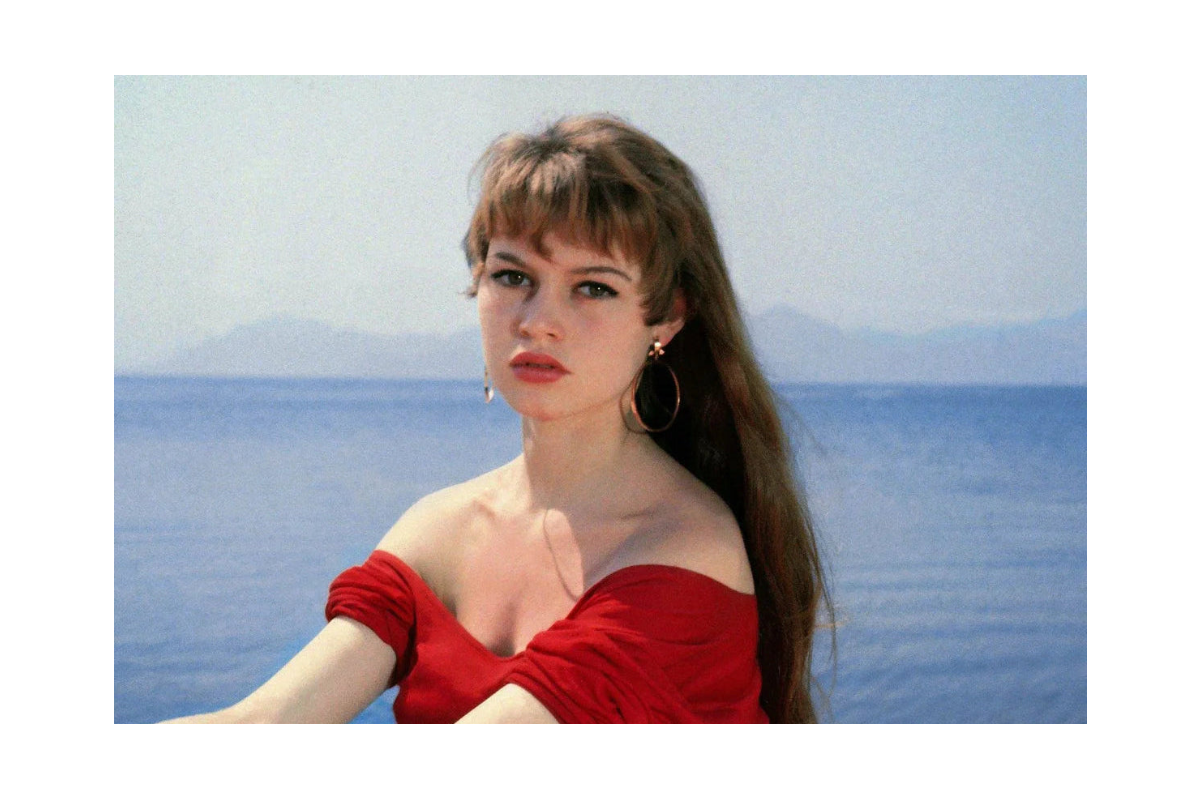
Considered by many to be the first French it girl, Brigitte's style was enchanting. She made generous use of accessories and even lent her name to a style of neckline: the Bardot neckline, off-the-shoulder and
skin-baring in the most unassuming way, proposing an airy sensuality far removed from the rigid glamour of haute couture at the time. She was known for wearing light, fluid fabrics that followed the silhouette, celebrating the female form in a way that felt spontaneous, youthful and self-assured.
She also legitimised the use of ballet flats beyond the stage, reinforcing the idea that comfort and elegance need not be at odds.
The Côte d'Azur as Stage and Symbol
If there is one place in the world that carries the soul of Brigitte Bardot, it is Saint-Tropez. What was once a quiet fishing village in the South of France became, through Bardot's footsteps, the epicentre of relaxed European glamour. It was there, on the golden sands of the Côte d'Azur, that she built not merely a life, but an entire aesthetic.
The French Riviera of the 1950s and 1960s was the playground of the European elite, but Bardot rewrote the rules of what it meant to be seen in that setting. While other stars arrived draped in jewels and evening gowns, she appeared in a bikini, hair blowing in the sea breeze, feet in the sand and the world stopped to look. That simple gesture was, in practice, a declaration of freedom.
It was also on the Côte d'Azur that the bikini gained its cultural legitimacy. Bardot wore it in Manina, la fille sans voile and later on the beaches of Saint-Tropez, turning the bikini into a symbol of a new femininity, uninhibited, sun-kissed, sure of itself. What had once provoked scandal came to represent the youthful spirit of a generation.
A Style That Transcends Decades
Bardot's legacy in fashion is undeniable and surprisingly current. What she built was not merely an aesthetic, but a philosophy of style: less apparent effort, more authenticity. The effortless chic that dominates fashion editorials and Instagram feeds today has deep roots in the Bardot way of dressing.
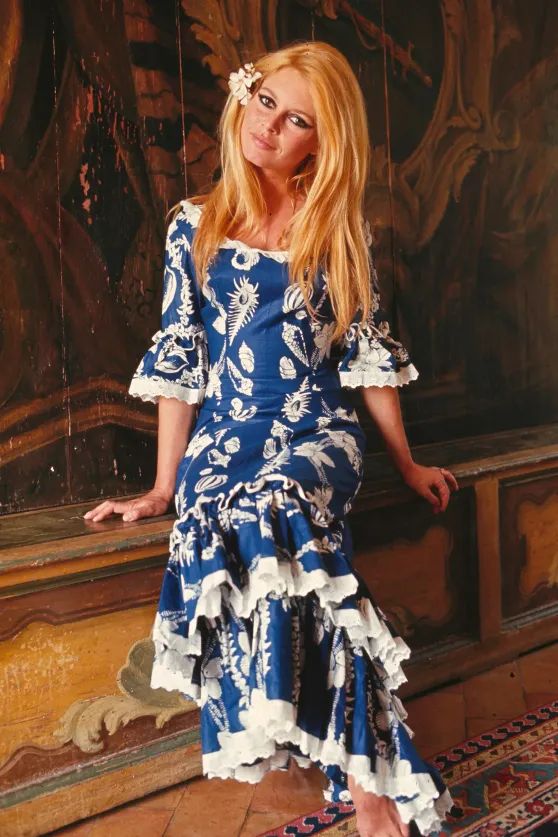
Her wardrobe was a simple but powerful equation: gingham (the vichy check she immortalised at her 1959 wedding), marinière stripes, full skirts with a defined waist, off-the-shoulder tops and capri trousers. Understated pieces that, combined with her presence, became unforgettable.
Today, beachwear and resort fashion brands continue to draw directly from this source. The Bardot neckline has never left the collections, it appears season after season, from fast fashion to haute couture. Ballet flats have returned to the centre of the trends. And the Saint-Tropez bikini remains the reference for any collection wishing to evoke summer, freedom and effortless femininity. It is exactly this spirit that guides Sofia Godinho: pieces that carry the lightness of the French Riviera, designed for the woman who moves with confidence and finds the sea to be her finest backdrop.
Behaviour as Part of Style
Bardot understood, avant la lettre, that fashion and behaviour are inseparable. It was not enough to dress differently, one had to live differently. She refused Hollywood's rigid protocols, chose Saint-Tropez over Los Angeles, took lovers rather than convenient husbands and spoke openly about her desires at a time when doing so was still taboo.
This radical authenticity was felt in the clothes because it existed, first and foremost, in the posture. Bardot did not use her body as an object of passive admiration - she inhabited it with pleasure and without apology. And it was precisely this that made her style so revolutionary: it was not the clothes that made Brigitte; it was Brigitte who transformed any garment into a manifesto.
Decades on, her legacy lives not only in the fashion archives, but in every woman who chooses comfort without sacrificing elegance, sensuality without asking permission, and style as a genuine expression of whoshe truly is.

FAQ
What was Brigitte Bardot's fashion style?
How did Brigitte Bardot influence beachwear?
What is the Bardot neckline?
Why is Saint-Tropez associated with Brigitte Bardot?
What does effortless chic mean in fashion?
"When I love, I do it without counting. I give myself entirely. And each time, it is the grand love of my life."
— Brigitte Bardot
GET THE LOOK


